Best Free 5G Government Phones in 2026: Providers and Device Options
The digital divide isn't just about having the internet anymore, it's about how well that connection actually works. As 5G coverage expands and more phones support faster networks, the government’s Lifeline program has had to keep up.
If you’re looking for a free 5G government phone in 2026, things look a lot different than they used to. The Affordable Connectivity Program, ACP, has ended. Households stopped receiving ACP discounts on June 1, 2024, but Lifeline providers are working harder than ever to offer 5G phones to attract eligible Lifeline customers.
This page explains how free 5G government phone offers work in 2026, which providers to check, and what to confirm before you apply.
1. The 2026 Connectivity Landscape: Why a 5G-Capable Phone Is Worth Checking
Back in the day, a "government phone" usually meant a slow, cheap device that struggled just to play a YouTube video. In 2026, that’s finally changed. Big carriers like Verizon, T-Mobile, and AT&T have put a lot of work into 5G. 5G can offer better speed and performance in supported areas, but 4G LTE can still work well for calls, texts, maps, email, and light browsing.
Here’s why a 5G phone is worth checking right now:
- Smoother video calls: Helpful for school, work calls, telehealth, and family video chats.
- Better performance in busy areas: 5G may work better in crowded places, depending on coverage and network congestion.
- Longer useful life: A 5G-capable phone is better for future app updates, but a good 4G LTE phone can still handle basic tasks.
2. Top Lifeline Providers Offering Free 5G Devices
The phones listed below are just examples of what you might find. They aren't guaranteed for everyone, so make sure to check what’s actually available in your ZIP code before you sign up.
Not all Lifeline providers are the same. Some are still trying to get rid of old 4G stock, while others have totally jumped into 5G. Here are the main ones to watch in 2026.
Assurance Wireless (T-Mobile Network)
Assurance is a huge favorite because they use T-Mobile’s massive 5G network. By 2026, most new people signing up are seeing much better options than those old 4G-only phones, though it still depends on current inventory when you apply.
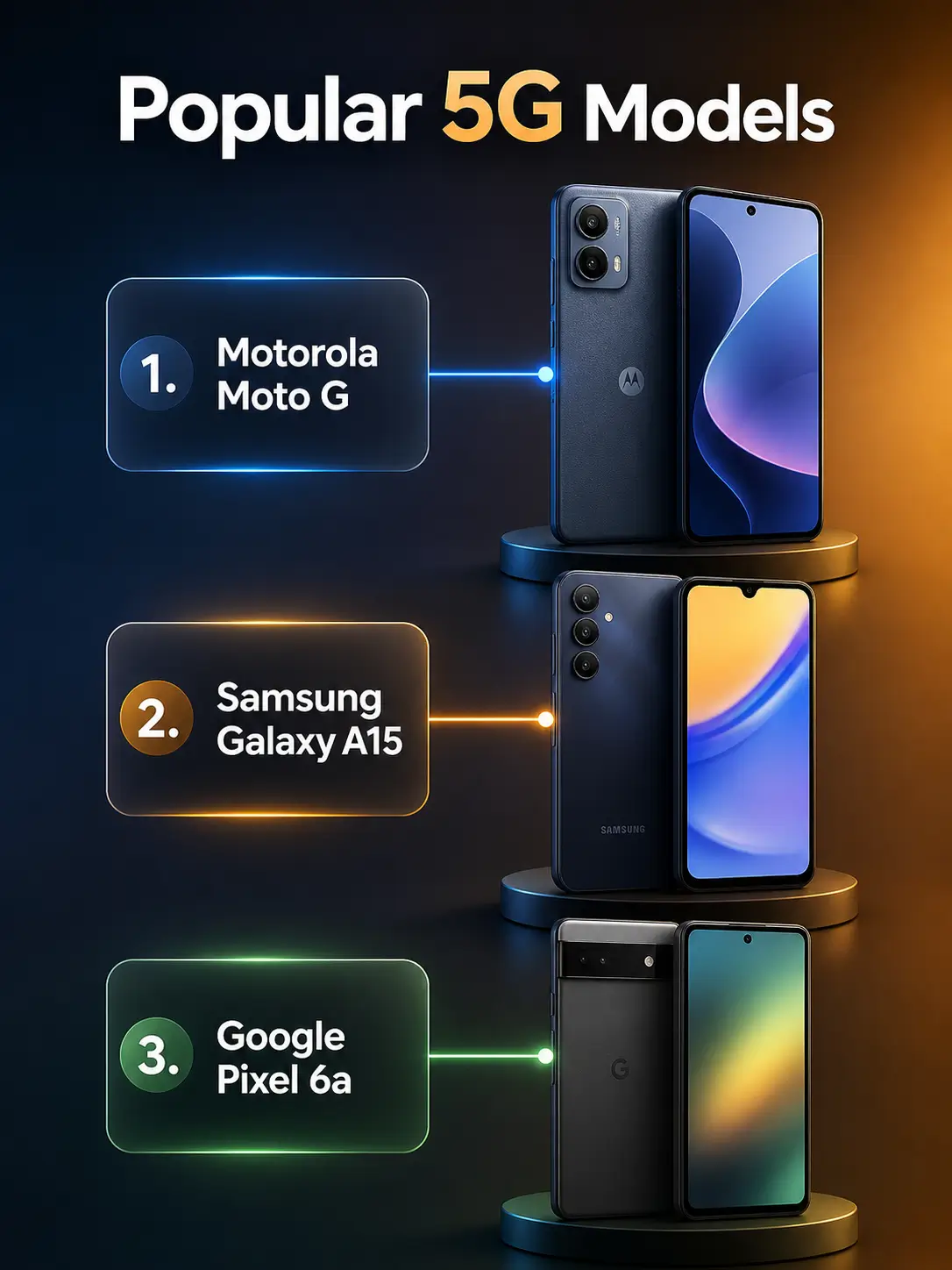
- The Device: You might see options like the Samsung Galaxy A15 5G or a Revvl 7 series phone, depending on your area and stock.
- The Catch: Because they’re so popular, shipping can sometimes take a little longer.
- Pro Tip: Take a look at our Assurance Wireless free phone guide for details on eligibility, required documents, approval steps, and phone options.
SafeLink Wireless (Verizon Network)
SafeLink may support 4G LTE or 5G service when you have a compatible device, compatible SIM, and 5G coverage in your area.
- The Device: You’ll often see a Motorola moto g 5G (2025/2026 version). People love Motorola because the software is "clean" and doesn't have a bunch of junk apps.
- Reliability: SafeLink is worth checking if Verizon coverage is stronger than T-Mobile or AT&T in your area.
AirTalk Wireless & Cintex Wireless
AirTalk and Cintex are providers many users check when looking for refurbished Apple, Samsung, or Google phone options. Instead of a brand-new budget phone, they focus on giving you high-end refurbished devices.
- The Device: This is where you can often find a Google Pixel 6a/7a or even a Samsung Galaxy S21 5G.
- Why choose them? If you care about having a great camera or a really sharp screen, a refurbished flagship from AirTalk usually beats a brand-new basic phone.
TruConnect
TruConnect may be worth checking if it serves your ZIP code and its plan extras match your needs.
- The Device: You'll typically see a BLU View 5G or a Cloud Mobile 5G handset.
- The Bonus: Check the current plan extras before you apply, especially if you use your phone a lot.
3. The 2026 Comparison Matrix
| Provider | 5G Network | Typical 5G Device | Best Feature |
|---|---|---|---|
| Assurance Wireless | T-Mobile | Samsung Galaxy A15 5G | Strong T-Mobile coverage areas |
| SafeLink Wireless | Verizon | Moto G 5G (2025) | Check where Verizon is strong |
| AirTalk Wireless | AT&T/T-Mobile | Google Pixel 6a (Refurb) | Refurbished premium phone options |
| TruConnect | T-Mobile | BLU/Cloud 5G | Check plan extras |
| StandUp Wireless | T-Mobile | Vortex 5G Models | BYOD and quick-check options |
Device availability note: The phones listed here are just typical examples. Providers might offer something different based on where you live, state rules, and what’s currently in stock.
What 5G Phones Are Actually Being Offered?
Let’s be real for a second, free government phones aren't going to be the most expensive models on the market. You aren’t going to get a brand-new Samsung Galaxy S25 or a Pixel 9 through Lifeline. What you can get in 2026 are solid, mid-range Android phones that work well on 5G when coverage is available.
These are possible examples, not guaranteed Lifeline inventory. Common 5G phones you'll see in 2026 include:
- Motorola Moto G 5G: Solid battery life and a very easy-to-use experience.
- Samsung Galaxy A14 5G: A great entry-level Samsung with a nice screen.
- TCL 30 5G: A budget-friendly phone with a big display.
- Nokia G400 5G: Tough build and simple software.
- Blu G91 5G: Very common with smaller, regional providers.
- Motorola Moto E 5G: Small, efficient, and easy to find.
Every provider is different. Some will let you pick your phone while you apply, so definitely keep an eye out for that.
4. The "Free 5G iPhone" Question: Reality Check
We get asked this more than anything else: “Can I actually get a free 5G iPhone from the government?”
Sometimes, but it depends on the provider, ZIP code, stock, refurbished availability, and whether a copay, shipping charge, or upgrade fee applies. This doesn’t mean everyone who qualifies will get one. iPhone offers are usually limited by what's in stock, your ZIP code, and the provider’s specific rules.
Apple started doing 5G with the iPhone 12. By now, the iPhone 12 and iPhone 13 are the main 5G iPhones that Lifeline providers may offer. You won't usually find these with the "big" names like Assurance. You’ll want to check with AirTalk or Cintex.
The "iPhone Formula" for 2026:
- Refurbished is Key: You won’t get a brand-new iPhone 17. You’ll usually see refurbished iPhone 12 or iPhone 13 options where available.
- The Co-Pay: Some companies might ask for a small co-pay, an upgrade fee, or a shipping charge to get an Apple device.
- Specific Guides: If you really want an iPhone, check out our Lifeline program free iPhone page and our Free Government iPhone guide for the latest updates.
5. Eligibility: How to Get Your Device in 2026
The National Verifier is the system that checks if you qualify. In 2026, it may give a quick decision when your details match available records, but some applicants may need to upload documents.
You Qualify if You Use:
- SNAP (Food Stamps): This is the most common way people get in.
- Medicaid: Just make sure your coverage is currently active.
- SSI: For seniors or people with disabilities.
- Section 8 Housing: Federal public housing assistance counts too.
- Veterans Pension: This is a big focus for a lot of providers this year.
- Tribal Programs: If you live on Tribal lands, you might get even more data or better device deals.
Qualification Based on Income:
If you don’t use those programs, you can still qualify if your household income is at or below 135% of the Federal Poverty Guidelines.
6. Realistic Expectations: The "Fine Print"
Here is the realistic fine print you need to know before you apply.
The "Unlimited" Data Myth
Most 5G government plans say they are "Unlimited," but in 2026, there’s usually a catch:
- High-Speed Bucket: Most plans give you a set amount of high-speed 5G data.
- The Throttling: Once you use that up, your speeds will slow way down. It’ll still work for texts and emails, but video apps may buffer or become difficult to use until high-speed data resets.
Customer Service Realities
Since Lifeline providers have so many people to help, support can take a while. If you’re having trouble setting up your phone, checking the provider’s help pages or community forums is often way faster than sitting on hold.
Advertising and Bloatware
Free 5G Android phones often come with a few apps already installed. This is how the providers help pay for the hardware.
Solution: Take 20 minutes when you first get the phone to "Disable" or "Uninstall" any apps you don't need. It'll save your battery and your data.
7. Step-by-Step: How to Apply Today
Check Your Signal: Look at a coverage map for your area. If T-Mobile is weak but Verizon is strong, go with SafeLink.
Get Your Papers Ready: You’ll need a photo ID and proof of your benefits, like a SNAP card.
Check Our Homepage: Start with our homepage to compare current phone options and see which providers are offering the best deals right now.
Fill Out the Form: Be honest on the National Verifier application.
Pick Your Phone: If you have a choice, always pick the 5G option over a 4G model, even if the 4G one looks a little flashier.
FAQs
Can I upgrade my current 4G government phone to 5G via software?
Is the 5G data truly "unlimited," or will it slow down?
Can I bring my own 5G phone (BYOD) to a Lifeline provider?
Why do some “free” 5G phones require a copay?
Does using 5G drain my battery faster than 4G?
What happens if my 5G government phone is lost or stolen?
Conclusion: Securing Your Digital Future in 2026
The shift to 5G isn't just about faster downloads; it’s about making sure you aren't left behind as the world moves toward more data-heavy services. Having a 5G-capable device ensures you have a stable, long-term connection to the tools you need.
Staying connected in 2026 is about more than just making phone calls; it’s about having the speed you need to keep up with the world. Take a few minutes to apply today, staying connected is one of the best ways to stay ahead.
Find a 5G Provider Now